Introduction
The adhesive or resin for carpet and rug backing is a medium that secures the fibers (carpet tufts) to the backing, preventing the fibers from separating or moving during usage. Styrene-butadiene resin has historically been the primary adhesive for machine-made carpets due to its flexibility and low cost. In more recent history, as the demand has increased to provide better durability and decrease environmental impacts, water-based acrylic resins for backing carpet and rug adhesives are increasingly used. These newer resins can achieve a bond strength and durability similar to styrene-butadiene resins while significantly reducing the emission of volatile organic compounds and/or undesirable odors.
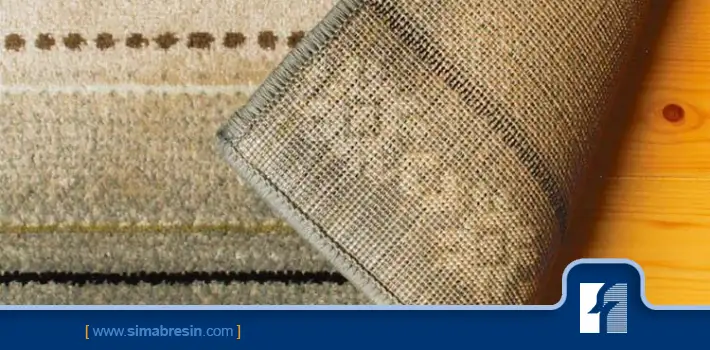
Carpet backing resin (or simply backing resin) is a water-based polymeric adhesive which is applied to the back of carpets or rugs to stabilize and hold the tufts in place while bonding the various components together (to secure the primary carpet layer to the secondary carpet layer). Typically, it is a synthetic polymer emulsion, often an acrylic latex or styrene-butadiene, and is often formulated with a high percentage of mineral fillers such as calcium carbonate. The resin partially penetrates the backing matrix, interlocks the fibers in place, and reduces separation or shedding. Also, with the resin stabilizing the structure of the carpet, it increases the overall strength, dimensional stability, and durability of the carpet against mechanical stresses from use.
The adhesives used for carpet backing are important for the strength and stability of carpets. Styrene-butadiene resin is rubbery and provides good flexibility and adhesion, which has made it the industry’s long-standing standard. However, it lacks sunlight and environmental resistance, and it can degrade over time, often yellowing or losing some of its properties. On the other hand, water-based acrylic latex is a water-based composition with little or no chemical odor and very low VOC emissions. The modern carpet industry has been moving to acrylic resins, especially in higher-end products that require color stability and good environmental properties. These acrylic adhesives are attractive because they have good adhesion, excellent weather properties, an even greater ability to adhere to standard carpet backing in manufacturing.
A key purpose of the resin component of a carpet backing is to ensure strong adhesion between the tufted yarns and the backing layer. Water-based acrylic adhesives work quite well at this, providing strong tuft-binding capacity. The technical specifications for some products indicate that acrylic latex can still adhere and provide very good tuft-holding strength even in formulations with a higher portion of mineral fillers than polymer content. This suggests that bonding strength does not significantly diminish when the acrylic is combined with fillers (for cost containment purposes or to increase other properties) and tuft fibers hold securely in place and do not pull away from the carpet under tension or traffic. In practice, acrylic latex is commonly utilized in the final layers of carpet backing systems to act as both a binder and fiber-holding adhesive. This is an everyday observation and serves to improve our confidence in the ability of acrylic latex to provide strong and stable bonds within a carpet structure.
Carpets are continuously exposed to foot traffic and bending, and for this reason, the abrasion resistance of the backing adhesive and its flexibility contribute to the carpet’s durability. Styrene-butadiene resin is one of the most flexible adhesives available, and the film it forms during drying is very elastic and retains some flexibility even after it is dry. Because of this fact, carpets made with styrene-butadiene adhesives can hold their shape and structure even after prolonged heavy foot traffic. Acrylic latex provides good resistance to abrasion and bending also, in its basic form. Although the acrylic film is slightly stiffer than the rubbery styrene-butadiene film, and the acrylic may seem to be less flexible, new acrylic formulations have overcome these weaknesses to some degree. For example, high-solid acrylic latex has been used in sport flooring installations and is often reported to have very good flexibility along with good abrasion resistance; it usually dries in a cross-linked form. Manufacturers can enhance the flexibility of the dried acrylic film by treating plasticizers or crosslinking agents, or modifying it to fit special application circumstances. Another significant benefit of acrylic latex is that it has better aging and UV resistance than styrene-butadiene resin. Accordingly, acrylic adhesives will degrade less over time from thermal aging or exposure to sunlight, and carpets made with this resin will remain stronger in severe light or extreme conditions.
Preservation of adhesive integrity in the presence of moisture, cleaning, and temperature variation is an aspect of stability that is especially important in carpet backing resins. Water-based acrylic adhesives generally form a stable polymer network upon drying that resists water passage. Many newer acrylic latexes are self-crosslinking agents or contain crosslinking agents (such as silane or isocyanate groups) that crosslink, during the drying phase, to create cross-links during polymer growth. The cross-linking of the acrylic polymer provides the adhesive film a level of washout or moisture resistance which minimizes swelling or excessive composition softening when exposed to carpet cleaners or humidity.
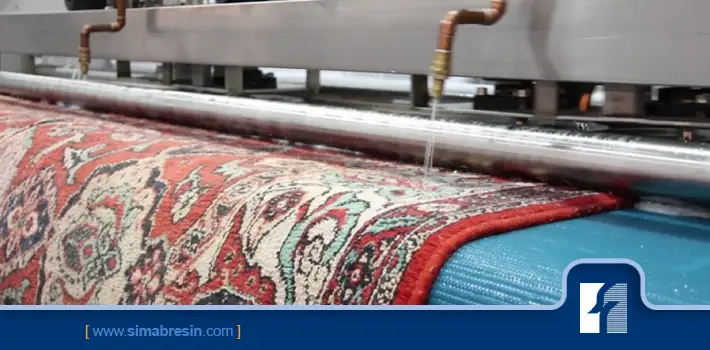
For instance, a technical description says that a specific acrylic carpet backing layer indicates that this acrylic film provides moisture resistivity and durability, with evidence of no degradation from cleanings or humidity. This degree of stability assures that a carpet backed with acrylic resin will remain stable and intact through frequent cleanings (such as shampooing) or accidental liquid spillage. Likewise, acrylic latex provides dimensional stability at elevated temperatures or under extreme humidity, without distortion or shrinking of the carpet. In conclusion, carpets backed with contemporary adhesives (including acrylic) are compliant with long-term durability (typically 10 – 15 years of service life) and retain their integrated form, even at the end of their service life.
Table 1 – Comparison of Styrene-Butadiene Resin and Acrylic Latex as Carpet Backing Adhesives
| Key Feature | Styrene-Butadiene Resin | Acrylic Resin (Water-Based) |
| Adhesion Strength | Strong adhesion to fibers and backing; industry standard for tuft-binding strength. | Very strong adhesion; adjustable strength with crosslinking agents. Provides firm tuft locking even in high-filler formulas. |
| Flexibility and Mechanical Resistance | Highly flexible and elastic; excellent crack resistance under bending and pressure. Good abrasion resistance due to the presence of styrene (enhances hardness). | Good flexibility (slightly less than styrene-butadiene). Suitable abrasion resistance that improves with formulation. Excellent resistance to aging and UV; maintains shape and avoids brittleness over time. |
| Resistance to External Factors | Performs well in normal environments but is sensitive to UV and ozone over time (color change or quality degradation). Usually requires crosslinking agents for adequate water resistance. | Excellent resistance to sunlight, UV, and heat; suitable for outdoor or light-exposed carpets. The polymer film is insoluble in water after drying (due to crosslinking) and resistant to washing and moisture. |
| Environmental Features | Contains styrene monomer; relatively high VOC emission, especially at installation (new carpet odor). Recyclable but difficult (due to thermoplastic nature). | Negligible VOC and odor. Carpets with acrylic adhesives easily meet strict indoor air quality standards. Some acrylic resins use bio-based (renewable) monomers. |
Water-based acrylic resins are a new class of adhesives for carpet and rug backings that greatly enhance the durability and stability of textile flooring, while working within existing manufacturing methods. These adhesives facilitate improved fiber-to-back bonds which result in carpets having greater resistance to heavy traffic, mechanical wear, and severe environments. In addition, due to their formulation without harmful volatile compounds, these adhesives are environmentally friendly, and reduce the undesirable odors associated with new carpet.
What causes some carpet and rug fibers to come out over time, and is it related to the quality of the backing resin? Yes, this is a direct function of the backing resin’s inability to hold the tufts and modern water-based resins have been developed to form a strong bond and resilience.
What causes the backing of a rug to crack and become brittle after years of use? This occurs because low-quality resins age and degrade while advanced water-based resins maintain their long-term flexibility for rug stability.