

Acrylic Resins in Pressure-Sensitive Adhesives
Pressure-sensitive adhesives (PSAs) typically contain water-based acrylic resins as the main polymer component, which contributes significantly to the adhesion performance. Emulsion (water-based) resins have been increasingly used instead of solvent-based systems, due to their environmental and safety benefits. In all adhesive technologies, PSAs are adhesives that remain tacky at room temperature without heat or solvent activation, to form a bond with light pressure.
Nature of Pressure-Sensitive Adhesives and Water-Based Acrylic Resins
Pressure-sensitive adhesives (PSAs) are adhesives that behave in a tacky, viscoelastic state at room temperature, and develop adhesion between surfaces with low pressure – by not requiring drying, or a chemical reaction, to bond the surfaces together. PSAs are usually made up of polymers that have low glass transition temperatures (Tg) to remain soft and pliable under serving conditions. Acrylic polymers are one of the most common backbone polymers that are utilized in today’s PSAs because of their high levels of stability, clarity, oxidation and ultraviolet resistance, and to wet to various substrates.
Water-based acrylic resins are a subclass of the types of polymers that can be produced as polymer emulsions in water. In these systems, acrylic monomers (e.g., butyl acrylate, 2-ethylhexyl acrylate) and small amounts of polar monomer (e.g., acrylic acid) undergo emulsion polymerization in water, to create polymer particles. This produces an acrylic latex containing resin particles that can act as the adhesive phase in pressure-sensitive adhesive formulations. Once the latex phase is applied to a backing material (e.g., film, paper or foam) and dried, the water evaporates, and the polymer particles coalesce to provide a solid, adhesive layer that is tacky to the touch.
Water-based acrylic resins have a formulation that does not use volatile organic solvents, with water serving as the carrier for the polymer. Water in this capacity provides a major safety and environmental benefit because all solvent-based PSAs use volatile organic compounds (VOCs) like toluene or hexane that evaporate during the drying stage, releasing pollutants without restriction. VOCs contribute to poor air quality, unpleasant odor, and health issues. Water-based adhesives utilize water as the volatile phase and therefore are free of VOC-related hazards, which makes water-based acrylic resins a green alternative. With these formulations, water serves as a complete substitute for organic solvents, and achieves some level of compliance with tough environmental regulations without complicated solvent recovery systems or excessive ventilation.
Environmental Advantages of Water-Based Acrylic Resins
Environmental and workplace safety regulation is one of the driving forces in developing water-based acrylic resins in PSA applications. Organic solvents used in traditional solvent-based PSAs are major contributors of VOCs and hazardous air pollutants (HAPs), and this prompted the development of fierce political pressure and similar policies globally to limit the emission of particulate. Water-based acrylic resins use non-toxic water as the carrier, which provides an inherent much lower emission of VOCs than solvent- based systems, making them regulatory compliant solutions for these issues.
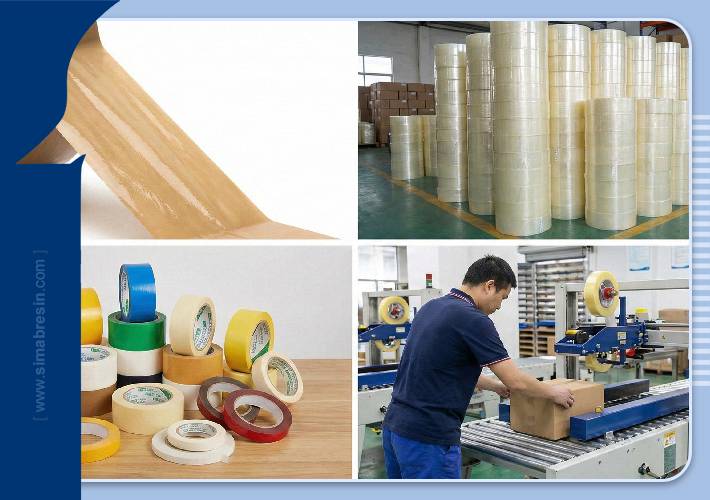
For example, in the pressure-sensitive tape and label market, the historical reliance on solvent-based adhesives has been rapidly changing based on waterborne acrylic emulsions, which greatly reduce VOC emissions during manufacturing and end-use. Another advantageous aspect of eliminating organic solvents in water-based systems is improved safety and hygiene in the workplace, as concerns regarding flammability, inhalation toxicity, or needing industrial ventilation are all much lower in water-based systems.
Comparison of Water-Based and Solvent-Based Adhesives
The following gives a comparison of water-based versus solvent-based acrylic adhesives across key performance and environmental metrics with a particular focus on clarity and moisture resistance.
| Feature | Water-Based Adhesives (Acrylic Emulsions) | Solvent-Based Adhesives (Acrylic Solutions) |
| VOC Emission | Negligible – Water is the primary solvent, with minimal VOCs | Significant – Contains volatile organic solvents requiring VOC control equipment |
| Adhesion & Cohesion | High adhesion with optimized formulation; may need additives for demanding applications | Naturally strong initial adhesion and high internal cohesion; proven in industrial applications |
| Clarity | Good clarity after drying; potential hazing with moisture if not properly formulated | Typically results in very clear films; highly water-resistant and not prone to hazing |
| Additional Notes | Environmentally friendly; non-flammable | Faster drying due to solvent volatility; flammable; odor and waste management concerns |
Clarity and Moisture Resistance
Clarity is an important performance requirement for many PSA applications such as transparent tape, glass labels, and protective films, etc. In the prior generations of PSA products, a known issue for water-based acrylic resins was that the adhesive film could turn hazy or white (blush) after prolonged exposure to water, humidity, or moisture. In these instances, moisture is trapped in the polymer microstructure, which leads to light scattering due to the interfaces formed between the polymer, moisture, and surfactants, ultimately reducing transparency and causing fogging. In contrast to water-based acrylic, solvent-based acrylic adhesives do not have this dispersed water phase and hence have superior resistance to whitening and can achieve a consistently clear film.
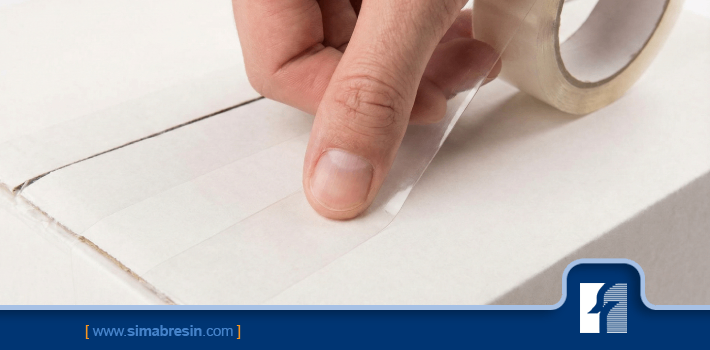
Fortunately, advancements in the development of waterborne resins have, in large part, alleviated this issue. There has primarily been an effort to increase resin hydrophobicity and improve particle coalescence after drying. As indicated above, the introduction of hydrophobic monomers, like vinyl esters, into the acrylic polymer significantly improves the water-resistance characteristics of the resulting coating. Studies have indicated that waterborne acrylic resins modified with hydrophobic monomers and subjected to prolonged periods of humidity retain 90% of their initial tack. Even in water immersion tests, when no visible whitening or haze was observed, waterborne films have maintained their clarity for 48 hours.
These results show that with a systematic formulation effort, waterborne acrylic resins can provide visual clarity and stability on par with solvent-based formulations, thus being more suitable for transparent adhesives.
Conclusion
Pressure-sensitive adhesives (PSAs) that incorporate water-based acrylic resins provide an unmatched offering of environmentally friendly but high technical performance. Increasing government regulation of VOC emissions and growing industrial awareness of sustainable technologies have driven these materials to the forefront of adhesive innovation over the past few years. While previous generations were challenged by mechanical performance reductions or “humidity-attack,” recent advancements in research and formulation improvements have largely overcome these challenges.
Most water-based PSAs currently available on the market now approach – or even outperform- solvent based systems in many areas of performance making them extremely useful in applications in packaging, automotive, electronics, and even medical devices. In summary, through chemical innovation, water-based acrylic resins are carving forward a new generation of PSAs that conform to our high-performance standards but also come with environmental safety. This unique combination of performance and sustainability has encouraged many adhesive manufacturers and users of PSAs to consider more water-based options.
Click here for PSA resin datasheets from Simab Resin
References