

Introduction
The resin of water-based facade paint is a game-changer in architectural exterior paints. Resins have allowed for durable coatings, visual appeal, and resistance to environmental elements when specifying coatings. In recent years, due to environmental and health concerns, the utilization of water-based paints has skyrocketed. Presently, about 75% of architectural paint used across the globe is water-based. The shift to water-based facade resins is because of performance gains and ease of use, along with environmental benefits. Within this paper, we explore water-based facade resins and evaluate their combination of properties (environmentally focussed, durability, aesthetics, and weatherability).
Water-Based Facade Paint Resin
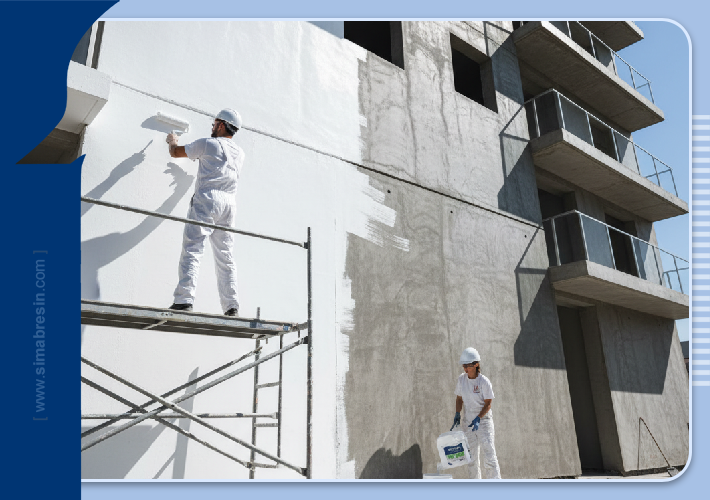
The resins for water-based facade paint are water-soluble polymeric binders that are the foundation of exterior paints. In most of these systems, the resin polymer, usually an acrylic resin, is dispersed in water as an emulsion. When the paint is placed onto the facade, the majority of the water evaporates, and the resin particles aggregate together to complete a continuous solid film on the surface. This creates a coating layer that adheres to the substrate while dry, is insoluble in water, and is stable.
Acrylic waterborne resins are the predominant type of resins used in modern exterior paints. Acrylic resins are appreciated for their fast drying, excellent adhesion to substrates, and great lightfastness. In contrast, solvent-borne facade paints (like alkyd or oil-based paints) are derived from organic solvents that emit strong odors and significant pollutants. Very few contractors use solvent-borne systems today, even though some can offer acceptable coverage and durability; their emission of VOCs, as well as the environmental and health concerns of working with their vapors, are limiting factors. With waterborne facade paints, less than 50% of solvents are left once the organic solvents are removed, resulting in a product that is less toxic and has less odor during the application and drying process. In sum, a waterborne facade resin approach applies some of the advanced technology in polymer technology for a durable and appealing coating option without toxic solvent injuries.
Advantages of Water-Based Resins in Facade Paints
Facade resins that are water-based have a number of advantages that position them in the forefront of exterior coatings:
- Environmental influence and safety: Water-based exterior coatings have very low levels of VOCs, and no toxic solvents, leading to virtually no emissions to the air. Water-based coatings are considered environmentally responsible, and compliant with higher environmental standards. The absence of flammable solvents also reduces fire hazards, and toxicity issues for painters and occupants.
- Quick drying, easy to apply: Waterborne resins, in general, dry quickly so the film reaches touch dry status in a relatively short period of time. This speeds up façade painting projects and reduces risks (dust landing on wet paint). Furthermore, tools (brushes, rollers, and spray guns) can be cleaned easily using soap and water, without the use of potentially harmful chemical solvents, improving the overall safety and convenience of the applicator’s experience.
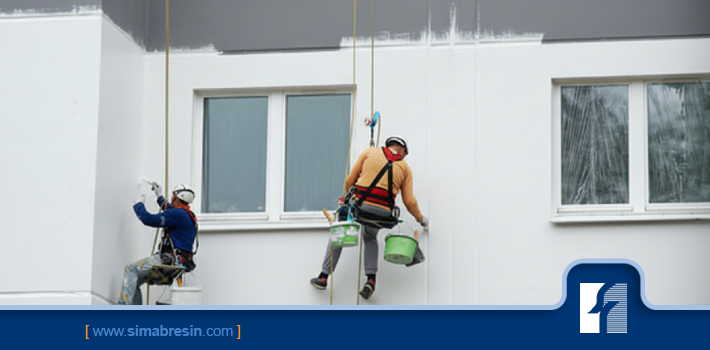
- Exceptional durability & weatherability: A primary benefit of water-based acrylic resins is their exceptional resistance to environmental factors like sunlight (UV), rain, moisture, and temperature changes. Because of their polymer structure, acrylic facade coatings exhibit excellent photostability, resulting in resistance to yellowing or becoming brittle. The industry consensus is that acrylic water-based exterior paints have very good durability because of their excellent UV resistance. These coatings are also weather-resistant to rain and humidity because they create a near waterproof layer that limits water infiltration, preventing potential damage. The dry films of water-based resins remain flexible, allowing for minor movement of the substrate (thermal expansion and contraction or vibrations) without cracking. In summary, their long-term durability will keep the facade coating performing as intended for many years without peeling or cracking.
- Preserved aesthetics over time and color fastness: Water-based façade resins are appropriate for maintaining visual appeal over time. While some earlier oil-based paints yellowed or chalked, acrylic water-based resins will provide very high colorfastness and excellent ultraviolet light stability. This means that the façade will fade or dull less, along with reaching a freshness for longer. New formulations of water-based coatings also provide the same gloss and even finish as oil-based paints, resulting in an overall homogeneous finish on the façade. Furthermore, the acrylic paints provide the best pigment transparency with both a minimum of yellowing or darkening over time. Therefore, when light fast pigments are combined with water-based resins, it will help keep a fitting appearance and stay attractive for several years.
Nevertheless, water-based paints do have their drawbacks. As a hydrophilic material, water-based coatings can be prone to mold or soiling in extreme humidity. The literature has indicated that this may arise through the potential for mold growth and dirt adhesion on the surface. To mitigate this, manufacturers often add antimicrobial and antifungal additives to the paint. These biocides (for example, some products sold as Rocima™) inhibit microbial growth on the building facade, but usually pose some degree of risk to humans or the environment themselves. Fortunately, new advancements in resin technology are producing new solutions to mitigate these drawbacks, which are briefly summarized in the following.
UV Protection and Self-Cleaning Coatings
The utilization of nanotechnology and next-generation additives to improve water-based resins has led to new possibilities for improving performance characteristics of coatings for exterior use. One area of innovative development is increasing UV protection with nanoparticles. Research has shown that adding small concentrations of metal-oxide nanoparticles, such as titanium dioxide (TiO₂) or zinc oxide (ZnO), to water-based acrylic resins can serve as UV absorbers, enhancing resistance to sunlight degradation. The primary role of the nanoparticles is to absorb UV radiation which protects the polymer chains from degradation, ultimately decreasing the degree of color fade while improving mechanical and photo stability.
Additionally, some nanoparticles exhibit photocatalytic behavior which assists in the decomposition of organic pollutants on the surface of paint. For instance, ZnO nanoparticles in UV light provoke reactions which degrade organic and microbial contaminants. Consequently, this allows the coating to obtain self-cleaning and antibacterial properties. For example, one study found that simply incorporating 2% ZnO nanoparticles into a water-based acrylic resin increased its abrasion resistance as well as improve the coatings self-cleaning ability, allowing
the nanocomposite coatings to significantly remove organic surface contaminants (i.e., methylene blue dye stains) from a variety of surfaces.
Another modern method for self-cleaning is based on the lotus effect. By constructing nanostructured surface texturing and employing specially designed hydrophobic resins (for example modified silicone resins), the coating becomes superhydrophobic. This effect can be compared to the surface tension of water droplets on the lotus plant where water and dirt do not stick. The facade coating with the lotus effect creates a very water repellent surface. Raindrops bead up and roll off of the surface taking dirt and grime with it and keeping the exterior façade much cleaner than its non-lotus coating competitor. These innovative self-cleaning coatings eliminate or significantly reduce the need to manually wash a façade, greatly extending the time between manual washing facades always keeping exterior façades looking better longer. The combination of photocatalytic nanoparticles and superhydrophobicity would be a promising direction for next-generation water-based resins which would lengthen durability and contribute to maintaining cleanliness and hygiene of surfaces.
Comparison: Water-Based vs. Solvent-Based Facade Paints
To clarify the differences, the table below compares water-based (acrylic latex) facade paint with solvent-based (alkyd oil) facade paint across several dimensions.
| Feature | Water-Based Facade Paint | Solvent-Based (Oil or Alkyd) Facade Paint |
| Environmental considerations | Very low emissions, environmentally friendly | Rich in organic solvents, high pollution |
| Odor and application safety | Low, non-irritating odor, non-flammable | Strong, pungent odor, flammable and requires ventilation |
| Drying time | Fast (touch-dry within a few hours) | Slower (several hours to fully dry) |
| Tool cleanup | Soap and water (easy, safe) | Thinner or chemical solvents (difficult, hazardous) |
| Exterior and UV durability | Excellent, high UV and water resistance; no yellowing | Very good, adequate resistance but possible yellowing and cracking over time |
| Color stability and appearance | Maintains color and initial gloss for years; minimal dulling | Possible loss of color and gloss over time (especially light colors) |
| Film flexibility | High, elastic film, resistant to cracking | Lower, harder film with a higher risk of cracking on moving substrates |
Conclusion
Water-based resins for façade paints have proven they can provide durability, aesthetics and weather resistance. The significantly lower environmental impact (lower levels of VOCs) and improved performance, makes them a go-to option for contemporary building projects. Research and development in their polymer chemistry (enhanced UV resistance and self-cleaning capability for example) has a high potential to provide water-based façade paint systems with even better multi-functionality and longevity in the very near future. Therefore, architects and engineers can confidently use these products to improve and protect urban façades with longevity and durability, while being aesthetically stable, and remaining environmentally conscious.
Frequently Asked Questions
Can your resins be used for facade paints, and do styrene acrylics have UV resistance?
Yes. They provide UV resistance for about 3 to 5 years, and using UV absorbers or anti-UV additives is recommended to enhance performance.
Can your resins be used for mineral and prefabricated (precast) facades as well?
Yes. The high adhesion that styrene-acrylic resins achieve to silica and stone granules, together with their strong water resistance, makes them an excellent choice.
References