Introduction
Today, acrylic resin for washable interior paints has become crucial in the manufacture of high-performance architectural coatings. These resin systems (also known as binder systems) are water-based resins that set and dry in a manner that not only provides for aesthetic beauty but high durability and strong resistance to washing. The result is the ability for water-resistant acrylic resins in interior wall paints to combine both their ability to resist abrasion and repeated washing with aesthetic beauty. The sections that follow provide a technical discussion of the properties of these resins and their contribution to the performance of washable interior paints.
Water-based acrylic resins serve as the primary binder in acrylic paints and have transformed the paint and coatings industry. The first water-based acrylic emulsion paint used for artistic purposes was created in 1954 and introduced exciting changes such as short drying times, water dilatability, and high flexibility.
These resins are made from esters of acrylic and methacrylic acid and are typically manufactured in three co-emulsion types: poly (ethyl acrylate/methyl methacrylate), poly (n-butyl acrylate/methyl methacrylate), and 2-ethylhexyl acrylate/methyl methacrylate.
Acrylic paints use pigment particles that are dispersed in an emulsion containing water, along with small amorphous polymeric particles. Water-based acrylic resins are considered environmentally friendly materials due to the lack of organic solvents, where water serves as the main dispersion medium. Water-based acrylic resins provide remarkable stability to light, heat and chemicals leading to coatings that are highly resistant to weathering, pollution, acidic and alkaline environments.
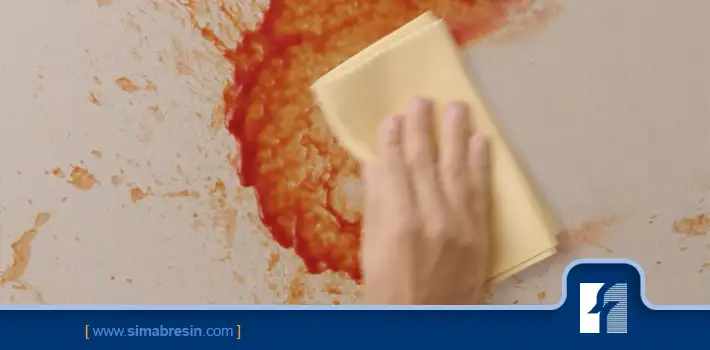
A washable paint is a type of coating which after drying, exhibits a denser and more compact film than standard paints. This dense film allows the coating to be cleaned on the surface with a damp sponge and mild detergents, while not compromising the coating or leaving visible marks. Washable paints are very resistant to not only stains penetrating the coating, but adhesion to the coating, and in the case of contamination, they can easily be cleaned.
According to the EN 13300 standard, washability is divided into five classes, with Class 1 being fully washable and Class 5 being non-washable. Class 1 paints can be continuously cleaned with a damp cloth and mild detergents with no damage to the paint film, while Class 5 does not tolerate any washing, even on a very minimal basis, and is degraded fairly easy.
Scrub resistance is one of the key indicators of the performance expectations of washable paints. Scrub resistance is determined by the number of brush cycles that can be applied to the surface before film failure occurs. The higher the number of cycles, the more scrub resistant the surface is against mechanical abrasion. In practice, this means that the very best acrylic paint products can withstand many thousands of mechanical wash cycles before any apparent degradation of either the paint film or loss of the surface’s appearance is noticed.
Stain resistance is another important property of a washable paint, in addition to resistance to mechanical abrasion. An ideal washable paint provides resistance to both water-based stains and oil-based stains, preventing the stain from wetting out the paint film and permeating the coated surface, simplifying removal. Washability is simply the ability of the paint film to wash away dirt and stains without scrubbing action, while scrub ability is the physical resilience of the paint film to sustain cleaning with a stiff brush.
Some coatings may perform well on mechanical scrubbing tests, but still retain staining on the surface. Other coatings may stain but provide weak film integrity under mechanical stress. In order for a higher performance washable coating to be effective, it must possess and balance these two properties, in that the coating must be easily cleanable yet possess mechanical durability.
Waterborne acrylic resins are critical to creating this combination of properties. High quality acrylic resins may produce continuous, dense films that resist mechanical stress associated with cleaning and also exhibit excellent chemical resistance to common detergents. The molecular structure of high-quality acrylic resin restricts stain infiltration and discoloration. In addition, the elastic behavior of acrylic polymers provides flexibility that resists cracking and peeling of the coating, thereby enhancing long-term durability of the coating.
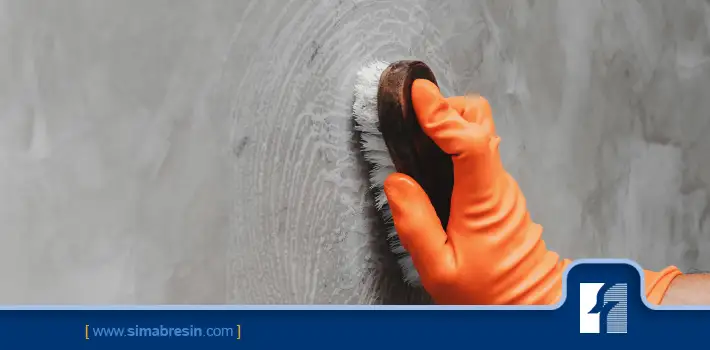
A significant development of water-based acrylic resin technology is the ability to attain both a high level of durability and a high level of aesthetic quality in interior coatings. Historically, high gloss finishes have been the mainstay to create washable surfaces, as smooth glossy films are less prone to accumulating dirt and may be cleaned easier. However, high gloss finishes may not be always desirable in regard to interior decoration.
Today, due to the development of resin chemistry, and formulation technology, it is possible to formulate even matte paints to be washable and still appear as a matte product. Thanks to high quality acrylic resins and specially formulated pigments, these coatings can form a compact but matte film. In such coatings, a factory-specified high quality acrylic resin is used in the formulation, however, the amount is controlled and used to produce a dense and durable coating, but not to the degree that the overall finish is shiny. In this way, a careful balance is achieved to produce a product that is both visually satisfactory (matte or a specific amount of sheen) and functionally durable.
In terms of aesthetics, water-based acrylic resins have other advantages over older resin systems. Acrylic paints are more resistant to discoloration and yellowing than traditional coatings. While alkyd paints, especially in darker areas, will eventually yellow over time, water-based acrylic paints will retain their color and brightness much longer, making people very happy when painting white or light-colored interior walls. Water-based acrylic paints are not only low odor, but they also emit very low levels of volatile organic compounds (VOCs), making them a considerable health and environmental advantage.
Practical Application and Areas of Use
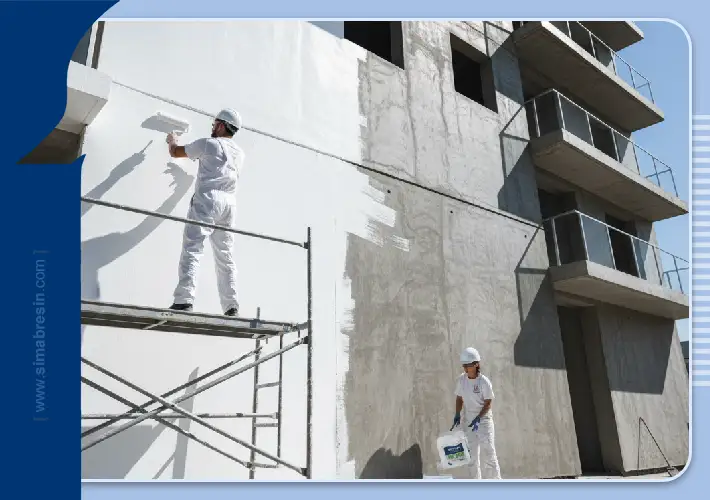
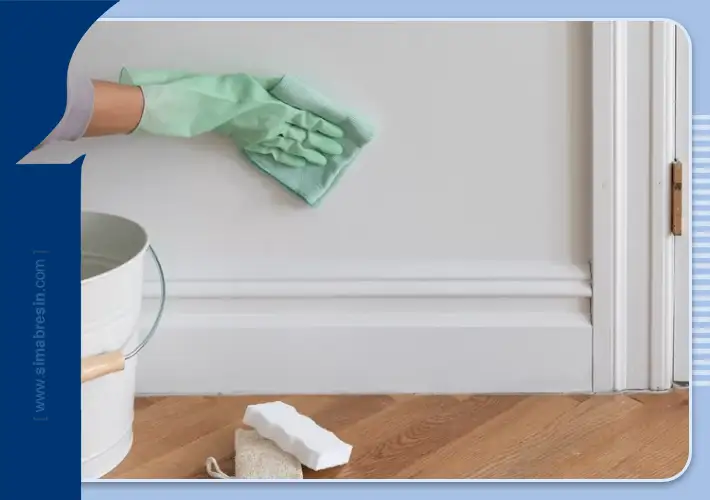
A wall that has been painted with washable acrylic paint can be cleaned without compromise, leaving no residue or causing damage to the film. In most cases, it makes the most sense to use this type of paint in areas that have high traffic or the potential for contamination (such as kitchens, hallways, children’s bedrooms, and bathrooms). Non-washable paints, on the other hand, should only be used in locations with low contact and low stain risk (such as ceilings or rooms that are barely used).
Next, a comparison can be made on the characteristics of both washable and non-washable paints, with respect to film integrity, scrub ability, gloss retention, and ease of cleaning.
| Property | Washable Acrylic Paint | Conventional Non-Washable Paint |
| Type of Resin (Binder) | 100% Acrylic Resin (Water-based Latex) which forms a strong and adhesive film | Vinyl Resin (PVA) which is less expensive but has lower resistance to water |
| Wash Resistance | Very high. It can withstand repeated cleaning with a damp cloth without damaging the paint film | Low. Washing causes film abrasion and visible stain marks remain on the surface |
| Stain Resistance | High. Dirt and stains do not easily adhere to the surface and can be removed easily | Low. Stains penetrate into the coating and are difficult to clean |
| Long-term Durability | Excellent. Maintains color and original gloss over time and is resistant to cracking and peeling | Limited. More prone to discoloration (yellowing) and faster degradation of quality |
| Recommended Applications | High-traffic and stain-prone areas such as kitchens, bathrooms, hallways, children’s playrooms, and living areas | Low-traffic and low-risk areas such as ceilings, storage rooms, and guest bedrooms |
Given the considerations presented above, it is clear that washable acrylic paint is a much more appropriate product for busy use and environments that are likely to collect soil and be subjected to high-contact use. While the cost is generally higher than traditional paint due to the use of quality acrylic resin, the paints prove to be more cost-effective in the long run due to the cost savings from less frequent repainting, and periodic wall cleaning.
While inexpensive paint that contains low-quality or weak resin may be marketed as a value, the paint will quickly become dirty and its appearance will fail, due to a very low resistance to washing and cleaning. In this situation, the total cost of time and product for repair or repainting will most likely exceed the cost of initial investment.
References