

Introduction
Paperboard printing and packaging play an important role in today’s packaging industry. Goods often need to be protected and showcased in packaging, especially in cardboard boxes and cartons, and the printed and coated surfaces of such cartons are important for determining the visual quality and the durability of premature degradation. These plus factors in packaging and printing are influenced to a certain extent by the printing and laminating systems that historically rely on organic solvent-based systems of inks, varnish, and lamination adhesives. In the past, these supplementary systems were linked with the generation of volatile organic compounds (VOCs), and troubling odors. While the replacement of organic solvent inks is evident with advances in polymer technology (along with the current global concern on environment), water-based polyurethanes (PUs) and other waterborne resins have emerged as the leading replacement systems for paperboard printing and lamination systems. These are safe alternative systems, environmentally friendly, and deliver exceptional adhesion, flexibility, and external factor resistance, while not relying on harmful solvent systems.
Water-Based Polyurethanes
Polyurethane is a polymer dispersed in an aqueous medium, with water being the resin carrier. Since water dispersions do not cure via solvent evaporation as solvent-based systems do, there is no risk for hazardous organic solvents to be emitted post-evaporation. This leads to a tremendous reduction of VOC emissions during application, as well as removing the unpleasant solvent smells and dangers from the working environment.
Waterborne PUs form hard film but are also flexible, and they exhibit very good adhesion with many substrates, specifically cellulose-based ones (such as paper and paperboard). Because of the polymer’s strong adhesion, there is very good print durability with waterborne PUs since flaking or cracking can occur. Moreover, because of crosslinking and polymer networks, they offer fantastic mechanical and chemical resistance, showing good scratch and abrasion resistance as well as chemical stability against many chemicals.
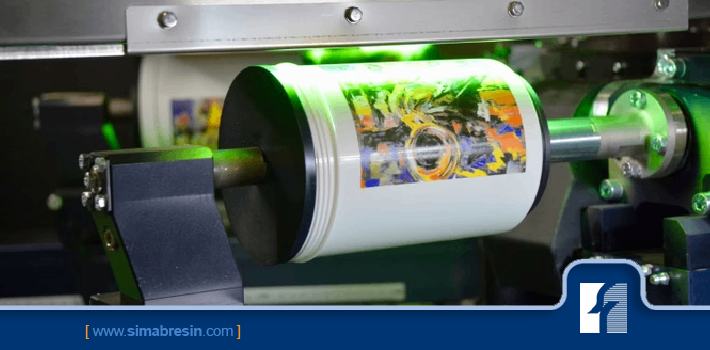
A very strong advantage of these materials is their drying speed. Their speed increases printing capacity for potential customers working in a printing facility. In summary, these properties have made waterborne polyurethanes the primary resin of choice for paperboard inks and protective overprint varnishes, with performance equal to or even better than their solvent-based counterparts.
Water-Based Inks and Coatings for Paperboard Printing
In box and carton printing applications, water-based inks are being widely accepted. Mostly composed of acrylic or polyurethane binders, these inks have largely replaced conventional solvent-based inks due to their environmental sustainability and excellent technical properties.
Waterborne PU ink produces vivid colors, excellent adhesion and flexible print that can withstand bending or rolling without cracking. They are also free of heavy metals and other environmental harmful materials making them suitable for food packaging, as they are odorless and free of harmful solvents. Testing has shown that water-based resins will lessen the environmental impact and also improve print quality, producing sharp glossy smudge free results, because the inks dry rapidly.
Overprint varnishes, considered a protective coating, are often applied to paperboard surfaces after printing. The waterborne PU varnishes have proven to be a consistent alternative for solvent-based overprint varnishes. These coating produce a transparent surface (glossy or matte) to improve appearance, protects against scratches and abrasion, and improve resistances against moisture and other environmental factors.
For instance, anti-scratch waterborne varnishes create matte finishes with very good abrasion resistance, making them a good choice for shipping cartons and heavy-use packaging. In short, PU-based waterborne inks and coatings provide good print quality and protective properties to ensure that paperboard packaging sustains its visual and physical integrity.
Water-Based Adhesives for Lamination and Packaging
Laminating paperboard involves joining a printed or decorative layer to cartons, providing additional strength and aesthetics. The adhesive selection is critical. Solvent-based PU adhesives have traditionally been used to laminate films to paperboard; however, the new generation of water-based adhesives demonstrate comparable performance while delivering substantially better sustainability performance.
Water-based adhesives are usually formulated as polyurethane or acrylic emulsions. They are solvent free, and consequently safe for use in food packaging without fear of odors or contamination of product. Their solvent free attributes also make them non-hazmat materials, thus promoting safer and more sustainable processing options for our customers’ packaging supplies in the aftermath of COVID – handling hazardous solvent-based packaging materials does not keep health and safety to the forefront of best-practices.
Conclusion
Waterborne polyurethanes and solvent-free adhesives represent the future of paperboard printing and packaging, as they afford superior print quality, enhanced adhesion, low drying times, and outstanding scratch and moisture resistance that are critical for high quality packaging. In lamination, waterborne and solvent-free systems afford a durable bond utilizing no solvents, making production safer, quicker and, ultimately, more efficient.
On the environmental and regulatory front, waterborne systems replace hazardous air pollutants (HAPs) with a cleaner product that creates improved workplaces globally and satisfies tightening restrictions worldwide. Because sustainability is the new driver for packaging, water is the best choice for inks, coatings, and adhesives.
Looking forward, manufacturers who pioneer waterborne PU systems can offer durable, colorful, and safe packaging solutions while establishing their commitment to their customers and communities by promoting social responsibility and environmental protection. Waterborne polyurethanes and solvent-free adhesives are an important advancement in technology, and will serve as an important bridge to a green, sustainable packaging industry in the future.
References